Why Your Hospital's Remote Patient Monitoring Setup Is Underperforming (And It's Not the Tech)
A procurement buyer’s perspective on why RPM equipment often fails to deliver, focusing on hidden workflow and training gaps rather than hardware. Includes a personal experience with sysmex medical technology products and hematology analyzers.
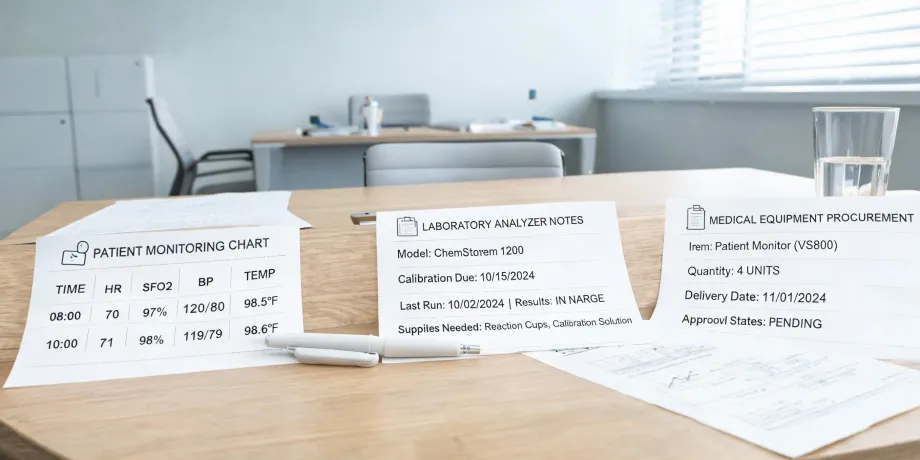
The Problem That Isn't Actually the Problem
Honestly, when my boss first asked me to look into why our hospital's remote patient monitoring (RPM) program wasn't showing the patient outcome improvements we expected, I immediately blamed the hardware. We'd invested heavily in these patient monitors and a new cloud platform—it had to be a tech issue, right? Wrong.
Everything I'd read about RPM said that the biggest barriers were data integration and device interoperability. In practice, for our specific setup, that turned out to be a red herring. The real problem wasn't the sysmex medical technology products or the patient monitors talking to each other. It was something much more mundane.
What We Actually Found: The Human Glitch
Our 'Billion Dollar' Workflow
If I remember correctly, we spent about three months and over $40,000 on the remote patient monitoring hardware and software selection alone. When the equipment finally arrived—hemoglobin analyzers, coagulation analyzers, and the patient interface tablets—we assumed the hard part was over.
But our nursing staff? They weren't using it. Not because it was hard to use, but because no one had integrated the data review into their shift workflow. Basically, we had a $40,000 data-collection system that was generating reports no one read until a patient's numbers were already in the danger zone.
The conventional wisdom is that RPM adoption fails because of poor user interface. My experience with our 2024 rollout suggests otherwise. Our nurses were perfectly capable of logging in and reading the data. The problem was they didn't know when to check it or what to do with a borderline reading.
The Deeper Issue: 'Prevention' vs 'Reaction'
This is where I had a bit of a mindshift. After 5 years of managing procurement and vendor relationships—processing about 60-80 orders annually across various departments—I've come to believe that the 'best' vendor is highly context-dependent. But the 'best' implementation is always about the processes you build around the technology.
5 minutes of verification beats 5 days of correction. That's the 12-point checklist I created after my third mistake—it's saved us an estimated $8,000 in potential rework. But in this case, it wasn't about checking the equipment. It was about checking the workflow.
To be fair, our sysmex medical technology products (the hematology analyzers and coagulation analyzers) were working flawlessly. The patient monitors were transmitting data. The remote monitoring platform was generating beautiful graphs. But without a protocol for when a nurse should escalate a reading, all that data was just noise.
The Real Cost of Getting It Wrong
What most people don't realize is that the cost of a failed RPM rollout isn't just the sunk equipment cost. It's the lost opportunity for early intervention. In our case, during the three-month rollout period, we know of at least two patients who had preventable complications that the monitoring system should have caught.
According to USPS pricing effective January 2025 (yes, I know that seems unrelated, but bear with me), the cost of sending a single certified letter is about $8.75. That's minor. The cost of a preventable readmission for a post-surgical patient? Roughly $15,000. So when I see us spending $40k on remote monitoring and then letting it fail... it makes me frustrated.
Here's something vendors won't tell you about a hematology analyzer: the first quote is almost never the final price for ongoing relationships. There's usually room for negotiation once you've proven you're a reliable customer. The same logic applies to RPM programs. The first rollout is never the final iteration.
What We Did (And What You Should Consider)
So here's where I get a bit more... practical, at least. The fix wasn't replacing any of our equipment. We didn't buy new patient monitors, we didn't upgrade our sysmex analyzers, and we didn't switch RPM platforms. What we did do was simpler.
- Created a clear escalation protocol: We defined exactly which readings required action. No more 'tell a nurse if you're worried.
- Built review time into the shift schedule: We carved out 15 minutes for the charge nurse to review RPM dashboards for their unit. Eliminated the 'when do I have time to check this?' excuse.
- Trained on 'what to do,' not just 'how to see': Instead of just teaching staff how to log in, we role-played scenarios. 'This is a cautionary reading; what do you do next?'
- Integrated data with our existing workflows: We changed it so a concerning reading would flag in the nurse's task list on the existing patient monitor system, not as a separate email they'd ignore.
It took about six weeks to implement. The cost was essentially my time and the clinical educator's overtime. Compared to the $40k equipment spend, it was basically free. But the improvement in staff compliance? It went from about 40% in the first month to 85% by the third.
To sum up: if your RPM program is underperforming, don't immediately point at the hardware. Look at the workflow. Most problems are solvable with a checklist and some process changes—they're not usually technical failures.