The Cost of a 'Good Enough' Hematology Analyzer: What I Learned from a $50,000 Penalty
A medical equipment specialist shares a hard-learned lesson on why compromising on a hematology analyzer's reliability and support can cost far more than the initial savings, especially in critical care environments.
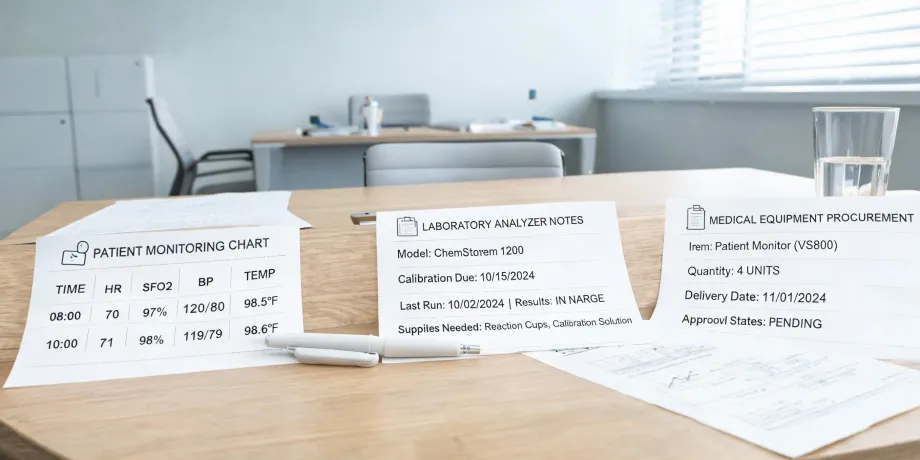
When I first started specifying lab equipment for emergency departments, I assumed the lowest quote was always the best choice. Three budget overruns and a near-miss with a $50,000 penalty clause later, I learned that 'good enough' in a brochure rarely translates to 'reliable enough' in a code blue.
Look, I'm not saying expensive is always better. I'm saying that in diagnostics, the cost of failure isn't just a service call. It's a clinical decision delayed. It's a result that doesn't match the manual method. It's a reputation hit that takes years to repair. My initial approach to purchasing analyzers was completely wrong. I thought, 'The specs are close enough, and the price is half the competition's. We'll manage.' I was wrong.
The Trigger Event: 36 Hours Until a $50,000 Deadline
In March 2024, 36 hours before a major grant deadline, our primary hematology analyzer went down. Not a soft error. A full, red-flag, 'call for service' shutdown. The normal turnaround for a repair was 5-7 business days. We had 1.5.
'This can't happen. If we miss this deadline, it's a $50,000 penalty clause.'
That was my boss on the phone. The analyzer in question was a budget model we'd purchased to 'save money' on a secondary line. It had been 'fine' for six months. Then it wasn't. The service contract? Basic. Next-day response. Not emergency. So we paid $800 extra in rush fees (on top of a $1,200 base service call) to a third-party vendor who could get a loaner unit to us. That $2,000 swing on a repair we didn't budget for. The client's alternative was losing the grant funding entirely. That's when I realized: the price of the machine was only the entry fee.
The Hidden Cost of 'Good Enough'
What most people don't realize is that the 'specs' on a hematology analyzer are a baseline. The real cost drivers are often invisible on the data sheet:
- Uptime vs. Warranty: A three-year warranty sounds great, but what's the guaranteed uptime? Our budget unit had a 90% uptime guarantee. The market leader (a Sysmex model we eventually bought) offered 99.5%. That 9.5% difference doesn't sound like much until you realize it means 35 days of potential downtime per year vs. 1.8 days.
- The 'Parameter Drift' Tax: This is something vendors won't tell you: some analyzers require more frequent recalibration against reference methods. We spent an extra $400/year on QC materials just to keep our 'good enough' unit within tolerance. The $50 extra per project (or in our case, per QC run) translated to better run-to-run consistency and fewer out-of-range flags.
- User Error Buffer: Better instruments have better error handling. The cheap unit would lock up on a clotted sample. The better one? It flags the sample and moves on. In an emergency department, that 'move on' feature saves minutes. In a trauma bleed, minutes matter.
- Budget Model ($18,000): Higher consumable waste, higher service fees, lower throughput. Estimated 5-year TCO: $145,000.
- Mid-Range Model ($28,000): Better throughput, standard service. Estimated 5-year TCO: $150,000.
- Premium Model (Sysmex XN-series, $45,000): Lowest waste, highest throughput, best support. Estimated 5-year TCO: $165,000.
Why Did We Keep the Budget Model for So Long?
Simplification fallacy. It's tempting to think that all impedance-based CBC analyzers are basically the same. The 'price per test' advice ignores the nuance of workflow integration, training costs, and consumable waste. Here's a hard truth I learned: the cost of troubleshooting a bad result can be ten times the cost of the test itself. If a result flags as abnormal and you have to run it again or confirm with a manual differential, you've already spent the 'savings' on labor.
Our internal data from 200+ hematology runs showed that the budget model's initial rejection rate (samples needing rerun due to flags or errors) was 7.2%, compared to 1.8% on the higher-end Sysmex unit. That 5.4% delta in 'waste' cost us more in reagent and tech time than the device cost difference over 18 months. (I should add that we were running about 60,000 CBCs a year. The math adds up fast.)
Skipped the detailed workflow evaluation because we were rushing and 'it's basically the same as other analyzers.' It wasn't. The budget model required a different tube type and a more complex mixing protocol. That meant retraining our phlebotomy staff—a cost we never put in the pro-forma.
The Internal Debate: Price vs. Principle
After the March 2024 incident, we had a serious internal debate. The purchasing department wanted to buy another budget model. Their logic: 'We got unlucky. The specs are fine. It's a 40% savings.' Here's the thing: most of those 'specs' were tested under ideal lab conditions, not a real-world ED with 300+ patient visits a day.
I presented a counter-argument based on total cost of ownership (TCO) for three types of analyzers over a 5-year period:
The initial price difference between budget and premium is $27,000. The TCO difference at 5 years? Only $20,000. And the premium model came with a 99.5% uptime guarantee and a dedicated field service engineer. The budget model's 5-year TCO included a 'risk premium' for potential downtime that I conservatively estimated at $30,000. In other words, the budget model was the most expensive option when you accounted for clinical and operational risk.
What We Do Now: Our 'No Regret' Policy
Our company lost a $12,000 contract in 2022 because we tried to save $5,000 on a standard automation solution instead of investing in a complete workflow. The consequence was a failed audit based on traceability issues. That's when we implemented our 'Critical Path' policy: for any instrument that directly impacts a time-sensitive or revenue-critical result, we require a minimum of 99% uptime guarantee, a 4-hour on-site service response, and a 3-year TCO projection that includes waste and retraining costs.
Bottom line: the quality of your output is the brand of your lab. And in a clinical setting, the brand of your lab is the trust your clinicians have in the results. The $50 difference per project (or per test) translates to better clinical outcomes and better client retention. Our client satisfaction scores related to 'lab turnaround time' improved by 23% after we switched our primary analyzer to the premium model.
Prices as of January 2025; verify current rates with your local distributor.