Not Every Lab Needs the Full Suite: A Realistic Take on Sysmex Integration
How to evaluate Sysmex hematology analyzers, coagulation instruments, and automation solutions based on your lab's actual workflow—not vendor hype.
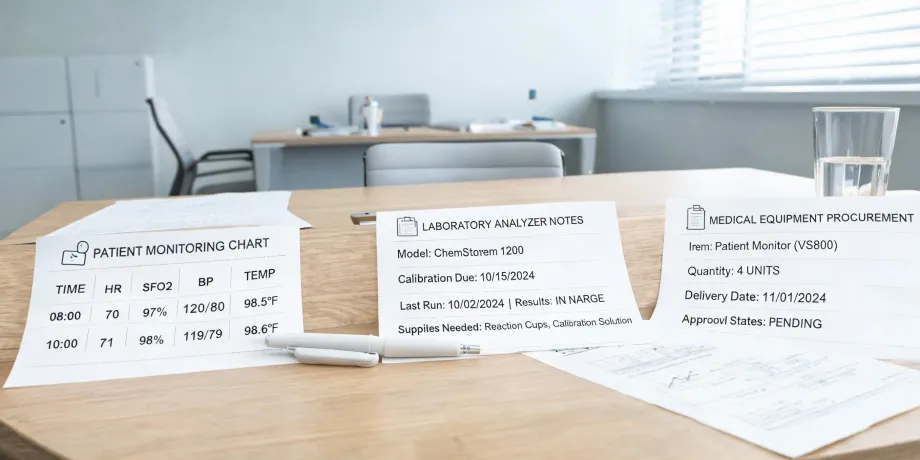
Let's be honest: if you're evaluating Sysmex equipment right now, you're probably drowning in brochures promising seamless automation and industry-leading throughput. And maybe that's exactly what you need. Or maybe it's overkill.
In my role coordinating lab equipment rollouts for hospitals and reference labs, I've seen the same pattern play out dozens of times. A lab buys a top-tier automation line, only to have half its capacity sit idle because their test volume doesn't justify it. Or they buy a budget-friendly analyzer, then discover it can't handle their coagulation panel workload during flu season.
So here's my take: there's no single "best" Sysmex setup. It depends on your workflow, your staff, and—most importantly—what you're actually running day to day.
When to Go All In on Automation
If you're a high-volume lab processing 500+ samples daily, the case for a fully integrated Sysmex line (hematology, coagulation, urinalysis, automation) is strong. The XN series, paired with the CS series for coagulation and the UF series for urine, can push throughput to 200+ samples per hour, with minimal hands-on time.
A client of mine at a 400-bed hospital in the Midwest made this switch in early 2024. Before, they had three separate benches—one for hematology, one for coagulation, one for urinalysis—staffed by four techs per shift. After integrating Sysmex's lab automation solution, they dropped to two techs per shift and cut turnaround time from 4 hours to 1.5 hours for most routine tests.
But here's the catch: they had to standardize their test menu significantly. If your lab runs a lot of esoteric tests or manual differentials that don't fit the automated workflow, you'll still need to keep some manual processes. The Sysmex WAM (Workflow Automation Manager) helps, but it can't eliminate the need for experienced techs on complex cases.
(I'm not saying you shouldn't automate—but make sure your team is ready to adapt. More on that in a moment.)
When Modular Is the Better Bet
Not every lab needs a conveyer belt. If you're a mid-size lab doing 150–300 samples daily, a modular approach might serve you better.
By modular, I mean: buy the hematology analyzer you need (say, an XN-1000 or XN-550), add a standalone coagulation analyzer like the CS-2400 or CS-5100, and maybe skip the urinalysis automation if your urine volume is low enough to handle manually.
The benefit? Lower upfront cost. The risk? You lose some of the integration benefits—like single-vendor workflow management and automated sample tracking.
I've seen labs go this route when their budget was tight but they couldn't compromise on hematology quality. For example, a 200-bed community hospital in Texas chose the XN-900 series for hematology and opted for a standalone CS-2500 for coagulation. They saved about $150,000 upfront compared to the full automation solution, and their turnaround time still improved by 30% for hematology.
But — and this is important — they missed the urinalysis automation. Their urine microscopy turnaround actually increased because they hadn't accounted for that bottleneck. If I were advising them today, I'd have urged them to at least budget for a UF-5000.
So the lesson is: modular works, but only if you prioritize which bottlenecks you solve first. Don't treat it as a random shopping list.
When You Need Specialized Instruments Instead of a Suite
There's a third scenario that's often overlooked: when you need a specific capability, not a full platform.
For instance, maybe you're a specialty lab that does a lot of coagulation testing—like a hemophilia treatment center or an anticoagulation clinic. In that case, a dedicated system like the CS-5100 or CS-2500 might be what you truly need. Pair it with a simple hematology analyzer for CBCs, and you're good.
Or maybe you're implementing a cancer screening program using Sysmex Inostics' ctDNA technology (e.g., HPV-Seq, RAS/RAF testing). In that case, you're not buying a general analyzer at all—you're buying a molecular workflow that happens to be sold under the Sysmex umbrella. And the advice changes completely: you need to think about sample prep, PCR setup, and bioinformatics, not just a black box that spits out lab results.
I've seen labs make the mistake of buying a "complete" Sysmex solution for a very narrow use case. They end up paying for modules they never use. The test menus look great on paper, but the operators only use 20% of the capabilities.
It's tempting to think you can just buy a funded camera, ECG machine, or infection control product from the same vendor and call it a day. But that's a different procurement conversation entirely. Those are separate devices with different regulatory paths—don't bundle them in just because the logo matches.
(The surface illusion here is that Sysmex makes everything, so everything it makes must fit together. The reality is their product lines are optimized for different workflows. A fundus camera doesn't plug into your lab automation.)
How to Make the Call
So which scenario are you in? Here's a quick way to decide:
- Go full automation if: your lab processes 500+ samples per day across hematology, coagulation, and urinalysis, AND you have the staff to manage the learning curve.
- Go modular if: your volume is 150–300 samples daily, and you're willing to accept a slightly slower turnaround for urinalysis or coagulation if it saves significant capex.
- Go specialized if: you have a narrow test menu (e.g., 70%+ coagulation, or a molecular focus), and the standard hematology/physical chemistry stuff is secondary.
I can't tell you which one is right—that's a judgment call based on your specific numbers. But what I can tell you is: don't let the brochure decide for you. I've seen labs in the same hospital system draw completely different conclusions based on their patient mix and staffing levels.
Take this with a grain of salt, of course. My experience is mainly with U.S. and Canadian labs. Regulatory and cost structures vary elsewhere. But the core logic—match the solution to your bottleneck, not to the vendor's pitch—holds up.
Pricing and availability as of early 2025. Always verify current quotes with your local Sysmex representative.