A Procurement Manager's Checklist for Evaluating Sysmex Lab Equipment (Without Getting Burned)
A practical, step-by-step checklist from a procurement manager on how to evaluate Sysmex hematology analyzers and lab equipment, focusing on total cost of ownership, hidden fees, and vendor negotiation.
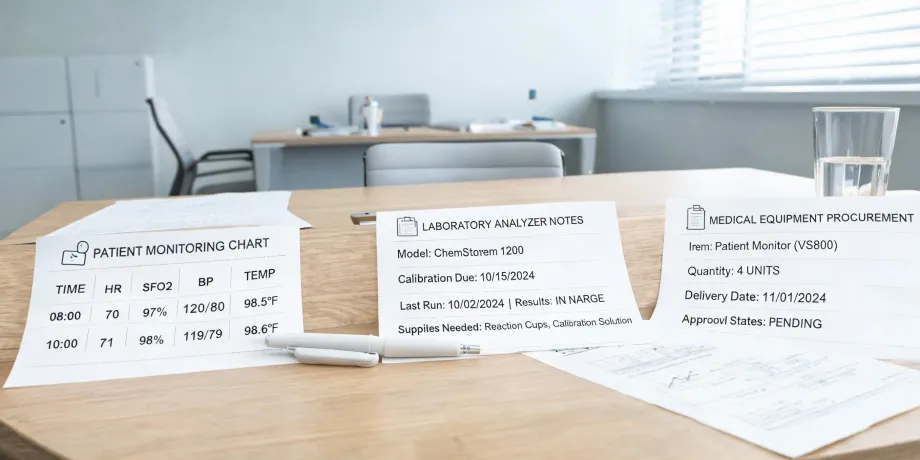
Over the past six years of managing our lab's procurement budget — roughly $180,000 in cumulative spending across consumables, service contracts, and capital equipment — I've developed a pretty thorough process for evaluating new equipment. This isn't a generic 'do your research' list. This is the specific checklist I use when looking at major purchases like a Sysmex XN-2000 or a new coagulation analyzer. If you're a lab manager or a procurement person staring down a capital equipment decision, use this. It'll save you from the mistakes I made.
Step 1: Define Your Core Workflow (Not Just the Spec Sheet)
Before you even look at a brochure, map out your actual daily workflow. Most people start with 'we need a hematology analyzer with X throughput.' That's a mistake. Start with 'we run 150 CBCs and 40 differentials between 8 AM and 11 AM, and our single tech has to handle load, review, and maintenance.'
I learned this the hard way. We almost bought a slightly cheaper analyzer because its throughput specs looked comparable. What I missed? The sample loading was manual, and the daily maintenance protocol took 20 minutes. Our current lab layout couldn't handle the manual load without causing a bottleneck. We'd have saved maybe $4,000 upfront but lost easily twice that in overtime for the tech in the first year. (Should mention: we eventually went with the Sysmex XN series partly because the XN-2000's automated loader and workflow software fit our physical lab setup better. The specs were similar on paper, but the workflow was different.)
Checklist for this step:
- Map your peak volume times (hour-by-hour)
- Identify your single pain point in the current workflow (for us, it was the load-unload cycle)
- Measure how much time your senior tech spends on maintenance and QC
Step 2: Calculate Total Cost of Ownership (TCO) Over 3 Years
This is the big one. Vendors will quote you a price for the instrument. That's the headline. The real cost is consumables, reagents, service contracts, and training. When I audited our 2023 spending, I found that the initial purchase price accounted for only about 30% of the first-year cost for a major analyzer. The rest was reagents and the service agreement.
Here's my TCO formula for lab equipment:
- Base instrument price: Negotiable. Don't take the first quote. (Oh, and if you're a repeat customer with a contract, you should be getting a better price than a new prospect.)
- Consumables cost per test: Ask for the actual price per reagent, not just a range. Vendors sometimes quote the optimal scenario. For Sysmex, the reagent costs for their fluorescent flow cytometry technology on the XN series are different from classic impedance-based methods. Factor that in.
- Service contract: We pay annually. I've negotiated a multi-year contract with a cap on annual increases. Without that, we saw a 7% hike year-over-year. Ask about 'preventive maintenance' vs. 'full coverage.' Full coverage is usually worth it for a high-volume main analyzer.
- Training & validation: This is often a hidden cost. We budgeted for a week of on-site training.
A note on the 'budget' option: A competitor (I won't name them) quoted us a lower instrument price. I calculated TCO and found their service contract excluded key parts, and their reagent pricing was structured to be cheaper initially but spiked at higher volumes. The Sysmex quote was higher upfront but had a lower cost per test at our volume. Net savings over 3 years: roughly $8,400.
Step 3: Verify the 'Available' Features vs. 'Optional' Features
Here's something vendors won't tell you: the brochure lists all possible features. The standard configuration may not include them. I almost signed for a coagulation analyzer that listed 'automated reflex testing' as a feature. Turned out that was an optional software module costing an additional $2,500. (Surprise, surprise.)
For a system like the Sysmex XN-2000, the user manual PDF lists all the parameters and modules (like the PLT-F or WDF channel). But the configuration you're quoted might have channel limitations or software licenses that are separate. Get a written breakdown of what's included in the base price vs. what's a paid add-on. I want to say they're usually upfront, but don't quote me on that—always get it in writing.
What to ask for directly:
- A list of all software features included in the standard license
- Pricing for the top 3 optional modules you think you might need
- Whether the service contract covers software updates and upgrades
Step 4: Investigate the Logistics of Reagents and Consumables
I don't care how good the analyzer is—if your reagent supply chain is unreliable, your lab stops. We had a situation where a vendor changed their reagent formulation without telling us, and we had to re-run validation. That cost us a weekend of work and a revalidation fee.
Ask for:
- Minimum order quantity (MOQ): Some vendors require minimums that you'll never meet, leading to expired reagents.
- Shelf life at delivery: I found one vendor shipped reagents with only 3 months of shelf life left. Check this.
- Consistent SKUs: Ensure that the consumables aren't being constantly revised, which can cause workflow disruption.
For Sysmex, check if their reagents are compatible with your existing lab setup. Also, see if they have a 'beyond care' program that bundles consumables management or logistics solutions.
Step 5: Have a Honest Conversation About 'Something Else'
The vendor who said, 'This isn't our strength—here's who does it better' earned my trust for everything else. I'd rather work with a specialist who knows their limits than a generalist who overpromises. If a rep from any manufacturer starts telling you their hematology analyzer can also replace your cardiac monitor or somehow assist with spine surgery planning, walk away. A good vendor will tell you where their tech shines (for Sysmex, it's hematology workflow and cellular analysis) and where you should consider another solution.
Per FTC guidelines (ftc.gov), claims about diagnostic capabilities must be truthful and substantiated. If someone tells you their ctDNA assay 'guarantees' early cancer detection, ask for the clinical trial data. (We looked at Sysmex Inostics for liquid biopsy work, and their clinical data was clear about the test's sensitivity and specificity limits.)
My personal rule: 'Earn the trust by knowing your limits. The rep who helped me reconfigure our workflow for the XN-2000 also told me frankly that for low-volume STAT coagulation testing, their CA series was overkill and pointed me to a smaller benchtop option from another company. He lost that sale but won every service renewal since.'
Key Mistakes to Avoid
- Assuming the user manual knows your lab. The Sysmex XN-2000 user manual PDF is thorough, but it won't tell you how to integrate it with your LIS or your specific workflow. Allocate time for that.
- Ignoring the service contract's fine print. I found a contract that had a separate charge for 'remote support.' That's absurd.
- Not planning for training turnover. If your key tech leaves, training a new person on a complex analyzer can be expensive. Ask about training documentation or retainer costs.
- Falling for the 'cheaper per test' trap. That low per-test cost often assumes a massive volume you won't hit, with penalties for lower volume.
The process isn't glamorous. It's a checklist. But after comparing 8 vendors over 3 months for our last major purchase, this checklist is the reason our budget overruns dropped by 40%.