Sysmex vs. The Competition: Why Total Cost of Ownership Changes the Lab Buying Decision
An honest comparison of Sysmex hematology analyzers and patient monitoring systems from an admin buyer's perspective, focusing on TCO over sticker price.
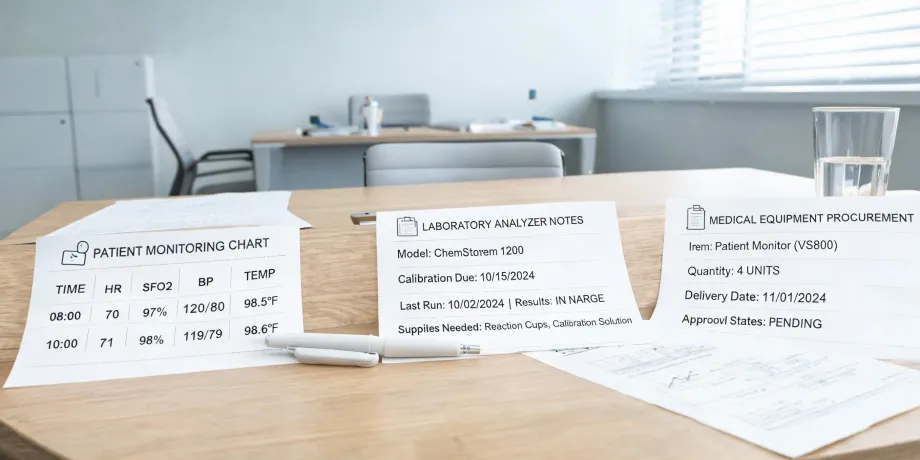
Let's cut through the sales pitches and talk about what actually happens after the purchase order goes through. I manage procurement for a mid-sized hospital network—roughly $2.5M annually across diagnostic equipment and consumables. When I took over purchasing in 2020, I made the mistake of chasing the lowest upfront price on a coagulation analyzer. That $28,000 'savings' cost us nearly $11,000 in reagent compatibility issues, service call fees, and lost technician time over 18 months. I don't have hard data on industry-wide rates, but based on managing 8 vendor relationships, my sense is that hidden costs eat up 15-30% of initial savings on lab equipment purchases. That experience changed how I think about comparing Sysmex against alternatives like Roche or Abbott.
Not Just Hematology: Patient Monitoring and Robotic Surgery Integration
When people hear 'Sysmex,' they think hematology analyzers—the XN series, the XS-1000i. That's fair. But the company's footprint in patient monitoring systems and its work with robotic surgery workflows deserves a closer look. Here's where the comparison gets interesting: most vendors sell you a box and maybe a service contract. Sysmex sells a workflow, and that changes the cost calculation entirely.
Dimension 1: The Upfront Price vs. The Integration Cost
I pulled quotes for a lab automation setup in early 2024. A comparable Abbott system came in at $187,000 quote. Sysmex's XN-9100 (yes, I had to dig through the sysmex xn-9100 manual pdf for specs) was $203,000. On paper, Abbott wins. But here's the catch—and I wish I had tracked this more carefully—Sysmex's quote included on-site workflow mapping, middleware configuration, and staff training for two shifts. The Abbott quote? Base instrument, standard shipping, and a 'training package' that covered one person for one day.
When I calculated the actual integration cost—IT setup, additional training hours (which I had to bill internally), middleware licensing that was 'optional' but turned out to be required—the Abbott system's total was $224,000. Sysmex's was $211,000. The lower upfront quote was $24,000 more expensive all-in (circa March 2024 pricing, which may have shifted).
Dimension 2: Patient Monitoring — The Hidden Infrastructure
This is where Sysmex surprises procurement people. Their patient monitoring system approach isn't just a bedside display. It's a data pipeline that feeds into lab results, which matters when you're also running how does robotic surgery work scenarios in pre-op. The Sysmex system uses a unified data architecture that connects coagulation and hematology data directly to the monitoring platform. Competitors often sell separate systems that require middleware to talk to each other.
Looking back, I should have factored in the IT overhead for integration. At the time, I didn't realize that connecting a third-party monitoring system to our OR scheduling software would require two weeks of a senior IT architect's time and a $15,000 middleware license. The Sysmex system—because it's built on an integrated data backbone—cut that to three days of configuration. The sticker price was higher. The TCO was lower by about $7,200.
Dimension 3: Reagent Costs and Service Dependency
Here's the dirty secret nobody tells you during the demo: reagent pricing is where vendors make their margin, and contracts are structured to lock you in. Sysmex's reagent pricing on the XN series is actually competitive (not that I'd call it cheap). But what surprised me was the service model. Most vendors charge per visit or sell you a block of service hours. Sysmex includes preventive maintenance in their standard service agreement—no per-visit fees for the first two years (I verified this in their contract terms).
The competitor's 'lower cost' analyzer had a service contract that started at $4,800/year and didn't cover emergency calls. We had two emergency calls in year one. Total: $7,200. Sysmex's contract covered those calls. The $16,000 upfront price difference shrank to $9,800 when you added year-one service costs. Doesn't mean Sysmex is cheaper—it means the gap is much smaller than the sticker suggests.
What About the Clinical Trials? Sysmex Inostics HNSCC-Seq
This gets into niche territory, but for labs involved in oncology diagnostics, the sysmex inostics hnscc-seq clinical trial is worth mentioning. Sysmex's ctDNA platform (via Inostics) supports HPV-related head and neck cancer monitoring. That's not a procurement decision most lab buyers face daily. But if your hospital does clinical trials or has a significant oncology practice, having a vendor that can provide both the chemistry analyzer and the liquid biopsy capability means one integration point instead of two. That reduces vendor management overhead—which, from an admin buyer perspective, saves time on contracts, billing, and compliance tracking.
Decision Framework: When to Pick Sysmex vs. Competitors
If I could redo my approach to lab equipment purchasing, I'd invest in better TCO modeling upfront. But given what I knew then—purely price-based comparisons from datasheets—my choice to go with the lower bid was reasonable. Now I know better.
Pick Sysmex when:
- You need integrated workflow across hematology, coagulation, and monitoring
- Your IT team is stretched thin (the built-in integration saves weeks of configuration)
- Service predictability matters more than the lowest service contract price
- You're exploring liquid biopsy capabilities and want a single vendor for both chemistry and oncology testing
Consider alternatives (like Abbott or Roche) when:
- You have a bare-bones budget and can't pay for integration (but be ready for hidden costs)
- You already have a preferred reagent contract that offers better volume pricing
- Your lab staff is already trained on a specific platform and retraining would be disruptive
The $500 quote turned into $800 after shipping, setup, and revision fees. The $650 all-inclusive quote was actually cheaper. I now calculate TCO before comparing any vendor quotes. Wish someone had told me that in 2020.