Rush Orders for Medical Equipment: When to Pay Extra and When to Wait
A practical, scenario-based guide for hospital procurement teams on handling urgent medical equipment orders, covering rush vs. standard shipping, vendor selection, and risk management.
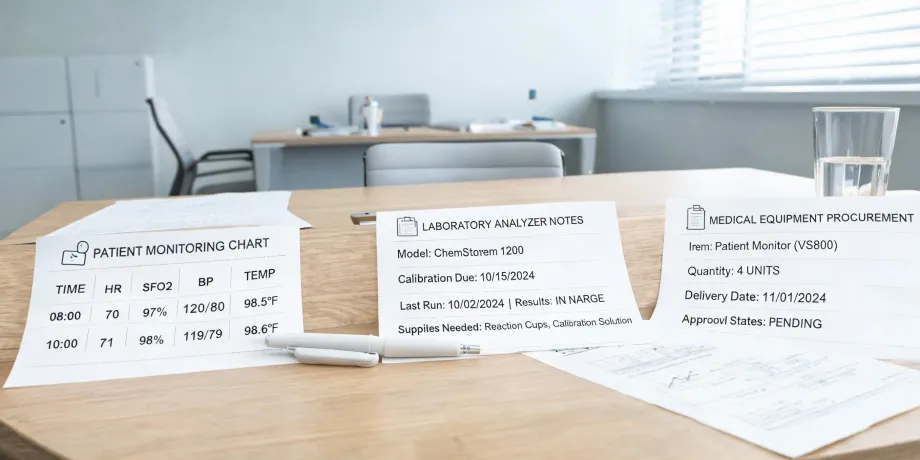
There's no one-size-fits-all answer for rush orders in medical equipment. Whether you're dealing with a broken hematology analyzer or a last-minute regulatory requirement, your decision depends entirely on the situation. I've handled over 200 urgent equipment requests in the last three years, and I can tell you this: paying for rush shipping isn't always the right move.
Understanding the Situations That Trigger Rush Orders
Before you decide to pay extra for expedited service, you need to classify your urgency. In my experience coordinating with hospital labs, I've found these four common scenarios:
1. The Machine Is Down (Critical). A key instrument fails, and samples are piling up. Every hour of downtime costs the lab in delayed results and overtime labor.
2. The Regulatory Inspection (Urgent but Manageable). You have a compliance deadline approaching, and a new analyzer or spare part is required for certification. The deadline is real, but there's usually some buffer if you act fast.
3. The Budget Window (Time-Sensitive, Not Critical). Your fiscal year ends soon, and you need to place an order to use up remaining budget. The equipment can wait a few weeks, but the purchase order must be issued now.
4. The 'Nice to Have' (Low Urgency). A department head wants a new coag analyzer, but the current one still works. There's no real deadline.
Most people think every rush is a Machine Is Down scenario. That's rarely true. And treating a Budget Window like an Emergency can waste thousands.
Scenario A: The Machine Is Down — Pay for Rush (But Smartly)
When a primary analyzer goes down in a busy lab, you don't have time for standard 3-5 day shipping. But here's the thing: paying for overnight delivery from any vendor isn't enough. You need a vendor who stocks the exact model you need and has a proven track record with emergency orders.
In March 2024, 36 hours before a large hospital's weekly tumor board meeting, their hematology analyzer (a sysmex xn series, if I remember correctly) flagged an encoder error. The backup system was down for scheduled maintenance. We had 24 hours to get a replacement unit delivered and installed.
So glad I had a relationship with a vendor who kept a dedicated inventory for emergencies. We paid for same-day air freight—about $1,200 over the base cost—and the technician installed it by 7 AM. Missing that deadline would have meant a $50,000 penalty clause for delayed oncology reports. The extra shipping cost was nothing compared to that.
What I mean is the decision wasn't about the shipping cost itself; it was about the potential cost of not acting. In this scenario, rush shipping is an investment in uptime.
Scenario B: Regulatory Deadline — Verify Specifics Before Paying
I've seen procurement teams panic over a regulatory deadline and pay for expedited freight when standard shipping would have worked. The key is understanding the lead time for documentation, not just the hardware.
For example, if you need a new sysmex xs 1000i manual to pass an inspection, the document itself is a PDF. You don't need a physical book overnight. A simple email request from your vendor, with a confirmation of receipt, is usually enough for the inspector.
However, if you're ordering a new anesthesia machine to meet a state health department deadline (effective July 2024 under standard OSHA guidelines), you need the unit on-site with verified calibration. In that case, check the vendor's installation availability before paying for rush shipping. The installation slot is often more restrictive than the delivery window.
Scenario C: Budget Window — Don't Pay Extra
This is the most common mistake I see. A hospital has a few weeks left in their fiscal year and needs to issue a PO. They rush the procurement process—paying for expedited shipping because they think the equipment has to arrive by the end of the month.
Actually, that's not true. In most cases, the PO just needs to be issued and the equipment ordered by the fiscal deadline. The physical delivery can happen in the next quarter. I've seen hospitals spend $800+ extra on rush shipping for a $5,000 refurbished mobility scooter for the hospital lobby just because they thought it had to be there. It didn't. The vendor could have shipped it standard and the PO would still have counted.
Put another way: check the financial policy. You may save a lot of money by simply asking your vendor to ship standard but invoice you this quarter.
How to Judge Which Scenario You're In
Here's a quick decision framework I use, based on our internal data from 200+ rush jobs:
- What's the real consequence of a 3-day delay? If it's a regulatory fine or lost patient revenue, go to step 2. If it's just a slightly late project start, wait.
- Can the task be completed with a digital or remote alternative? (e.g., a PDF manual, a loaner instrument, a software update.) If yes, don't pay for hardware rush.
- Is the rush shipping cost less than the cost of one hour of downtime? (Calculate: total lab revenue per hour + overtime labor + risk of repeat tests.) If yes, pay. If no, consider standard shipping.
- Does your vendor actually guarantee the rush timeline? I've had a ton of instances where vendors quoted "overnight" but only shipped it in 48 hours. Verify this before paying the premium.
Honestly, most of the time, the right answer is to call your vendor's customer support line and explain the situation. A good vendor will tell you if rush is worth it or not. We once paid $500 extra to overnight a part for a urinalysis system, only to have the local technician be unavailable for two days anyway. The extra shipping was totally wasted. In hindsight, I should have asked the vendor for the full timeline—shipping and service scheduling—before deciding.
One last thing: if you're dealing with a Mobility Scooter or non-critical equipment like a basic Nebulizer for a patient's home care, wait. Standard shipping is usually fine. The rush fees on medical equipment range from 15% to 50% of the base price. Save that money for the next emergency.